
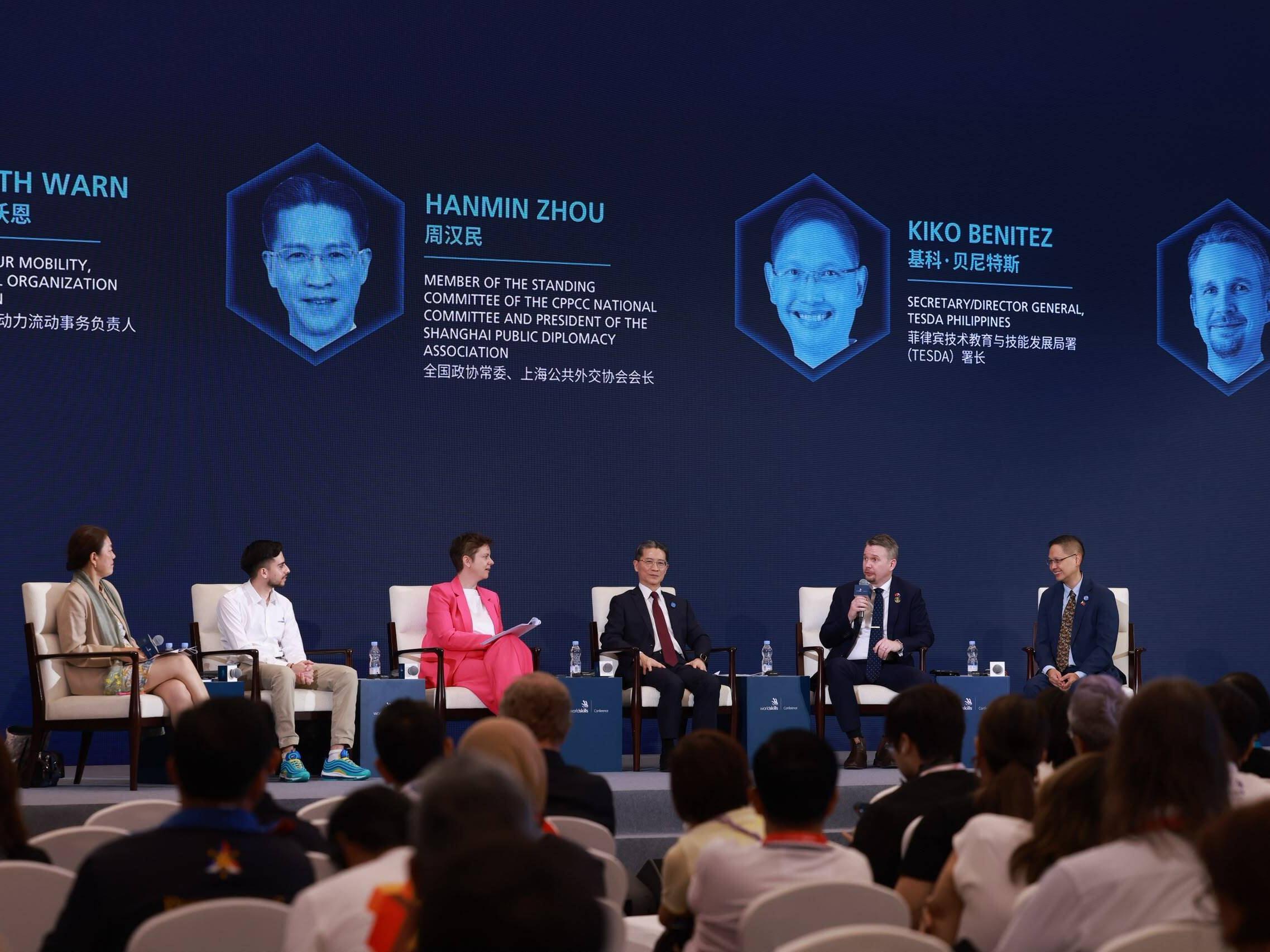
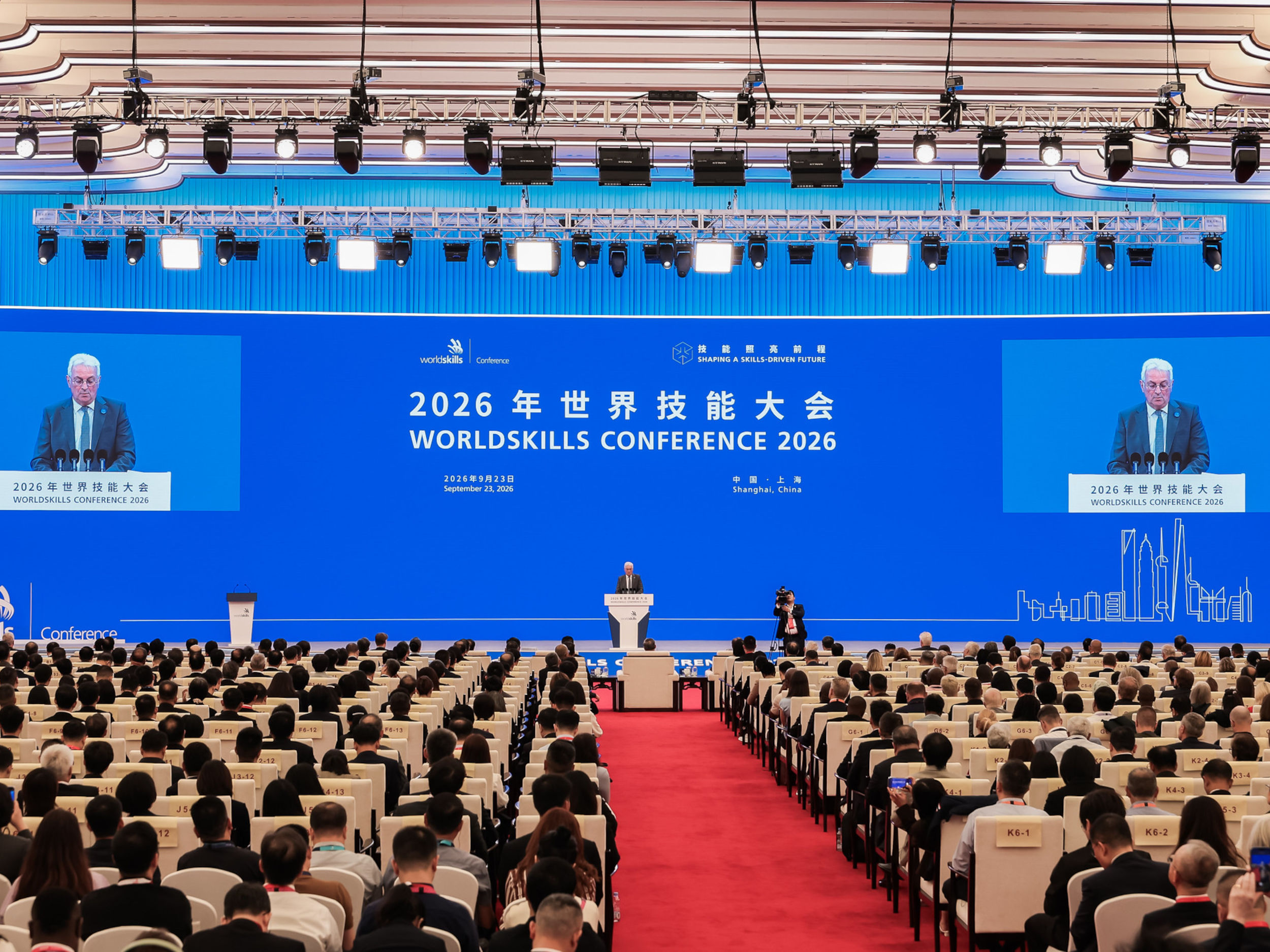
WorldSkills Conference 2026 opened with energy, urgency, and optimism. Over 2,000 delegates united around the idea that a sustainable and secure future depends on people with the right skills to make it happen.
The biennial Conference has been extended to three days to offer the international skills community an unparalleled platform in which to solve some of the most significant challenges facing our world today. Its agenda is a blend of plenary sessions, panels, side meetings, excursions, and a knowledge-sharing marketplace.
Day one began with an opening address from Li Qiang, Premier of the State Council of the People’s Republic of China. He welcomed the Ministers, policymakers, industry leaders, educators and young people who had travelled to Shanghai for the event. He went on to express his personal commitment to skills, outlining China’s ambitions for a strong and effective TVET system that would create opportunities for youth and prosperity for the country.
In his address, Francis Hourant, President of WorldSkills, thanked the assembled delegates for prioritizing skills this week. He said, “There is a reason communities still gather, in person, for moments like this. Focused attention is rare. And where attention gathers, progress follows, faster than any plan made alone.”
He went on to say that their attendance at the Conference was just the beginning. He said, “If we want the world to change, we have to change. If we want the world to innovate, we need to adapt. Today we ask what is the future we need, and what is the future we want.”
Christopher J Nelson, President and Chief Executive Officer of Stanley Black & Decker, built on this momentum. In a fireside talk with moderator Nozipho Tshabalala, he set out why skilled trades, not technology alone, will shape the future. He said, “A digital transformation runs through a physical transformation. It needs skilled trades to make it happen.”
He then called on everyone in the room to take action around the shared challenges the skills community is facing, saying, “Only you know what your particular local context needs. Choose one or two very practical things. And do them.”
The Opening Plenary, entitled Innovation ecosystems for TVET: Building human-centred sustainable skills Systems, was a forward-looking conversation focused on how skills systems can help solve the world’s shared challenges. The panel brought together perspectives from China’s national government, the European Commission, the International Labour Organization and industry, from WorldSkills Global Partners Festo and Neutech.
When asked to propose the most important ingredient for sustainable skills systems, Leyla Valiyeva, WorldSkills Champions Trust representative for the Middle East and North Africa, pointed to “youth agency”. She explained, “Young people need to be helping shape these systems because we are the ones experiencing them. We see their benefits and their faults. We need a seat at the table.”
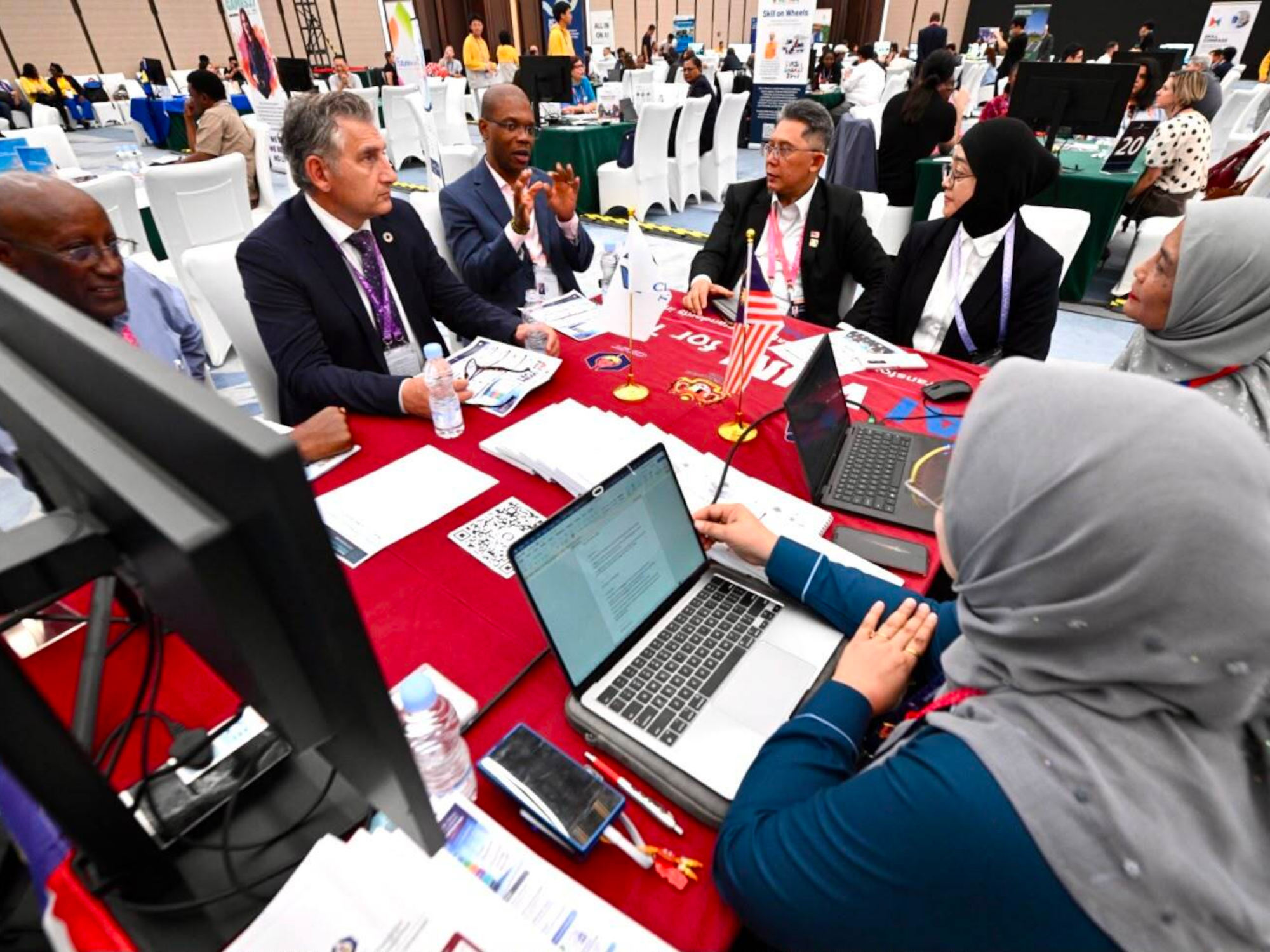
After a networking lunch, delegates toured the Competition halls and the Skills CoLab, an interactive marketplace where the skills community can learn about new projects and build new partnerships. The afternoon sessions turned to two of the Conference’s central questions: how to make TVET systems more inclusive, and how to make skills recognized across borders.
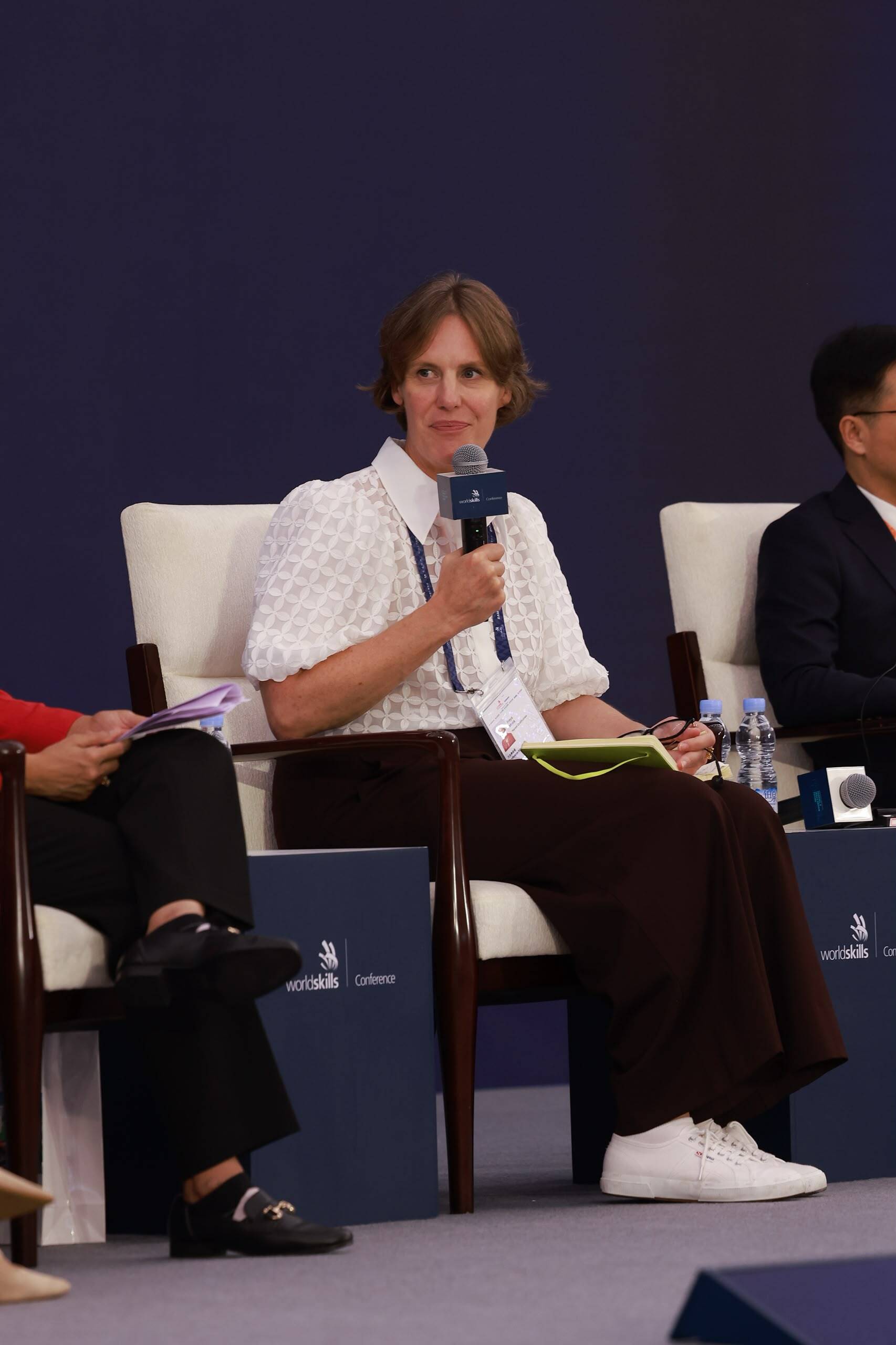
In the session Excellence for all: building more inclusive TVET systems, Freya Thomas Monk, Managing Director of Pearson Qualifications, outlined how quality and inclusion are fundamentally linked. She said, “It is not a choice between quality and inclusion. They go together. And, as we measure what makes a successful skills system, it is all about the outcomes. Young people should have a choice of pathways toward the career of their dreams and a wonderful future.”
In a parallel discussion entitled Beyond borders: Advancing frameworks for skills recognition, the focus was on making skills portable. Panellists shared examples of successful knowledge exchange between countries, where both sides benefit. They explored the idea of a skills passport to help skills travel more easily.
Commissioner Cameron Baker, Chair of the South Australian Skills Commission, shared his conviction that the WorldSkills Occupational Standards are essential to improving skills mobility. He said, “I believe the WorldSkills Occupational Standards is our Rosetta Stone. If we can agree on these 64 standards, and then we train to those standards, we can get to international portability quite quickly.”
The final session, organized by UNESCO Global Skills Academy, continued the conversation from WorldSkills Lyon 2024 on how partnerships can scale innovative learning opportunities. Speakers shared real-world examples of industry and educational institutions working together to increase the number of skills pathways and career development opportunities.
The day concluded with guided tours of the Competition, where delegates could see what skills excellence looks like in action. Tomorrow, delegates will explore how skills systems can take a human-first, skills-first approach to AI and emerging technologies. They will also have a chance to learn more about finance strategies for TVET and hear the five compelling pitches from the BeChangeMaker 2026 finalists.
Explore the full WorldSkills Conference 2026 agenda, and follow all the updates on WorldSkills social media channels.