
Across the skills movement, Members and Partners are finding ways to give young people access to skills. Over the last year alone, the community has been co-designing training and competition frameworks with local Experts, using storytelling to increase the visibility of skilled pathways, and encouraging policymakers to work with youth to shape more inclusive skill systems.
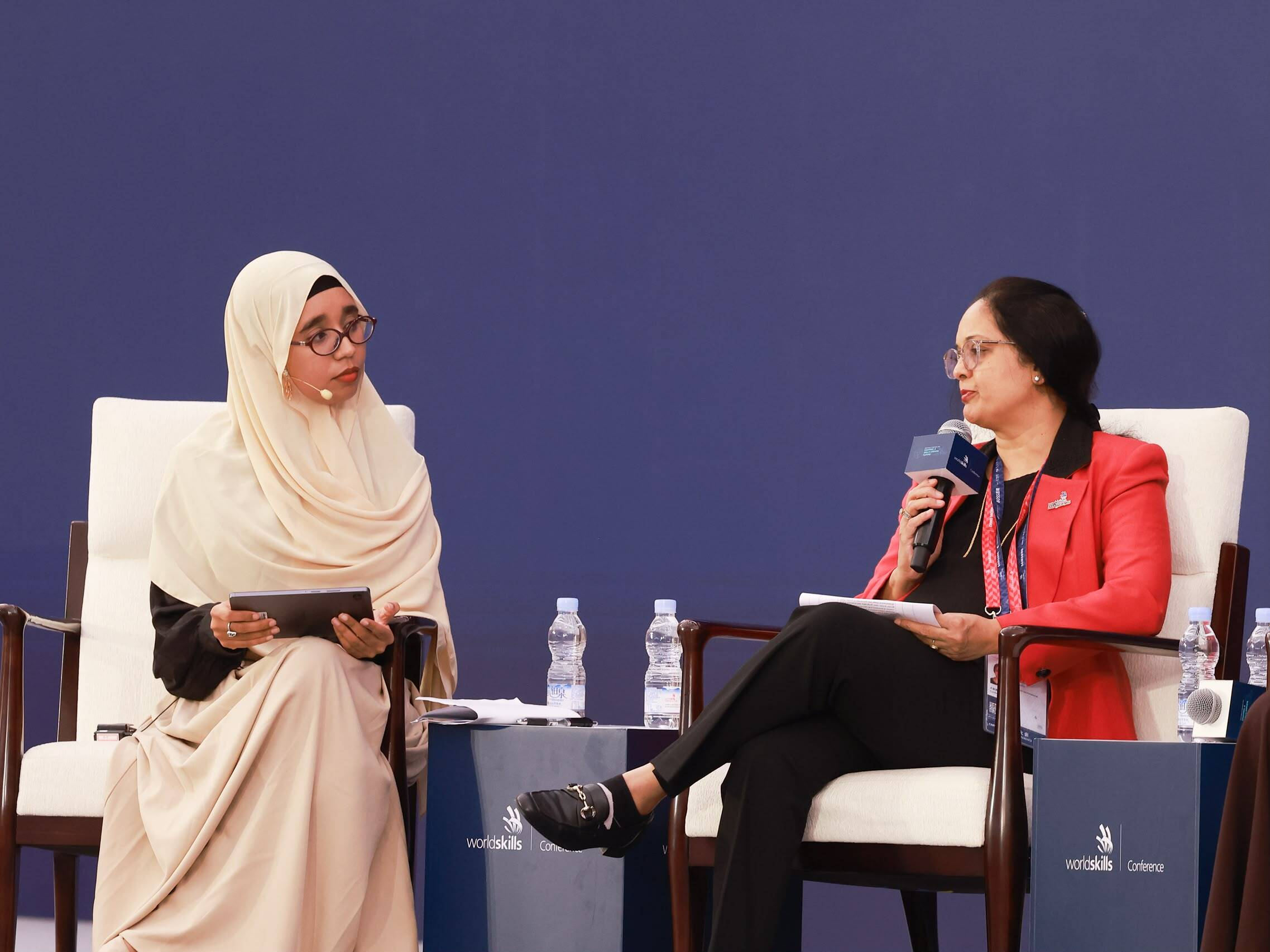
But how can these ideas be expanded so more young people benefit from the quality of skills training seen at WorldSkills Shanghai 2026? Yesterday at WorldSkills Conference 2026, a panel discussion entitled Excellence for all: building more inclusive TVET systems brought together international perspectives and experiences to debate the question.
Moderator Yousra Assali, who previously served as a representative of the WorldSkills Champions Trust, drew on her own journey from a girl in Morocco to a WorldSkills Champion in Mechatronics. She asked the panellists to put forward concrete ideas that could increase access to skills, especially for young women.
Swati Mujumdar, Pro Chancellor of Symbiosis Skills and Professional University, Pune, India, shared a saying in Marathi. She said, “If you skill a woman, it leads to the development of society. That leads to the development of the nation.”
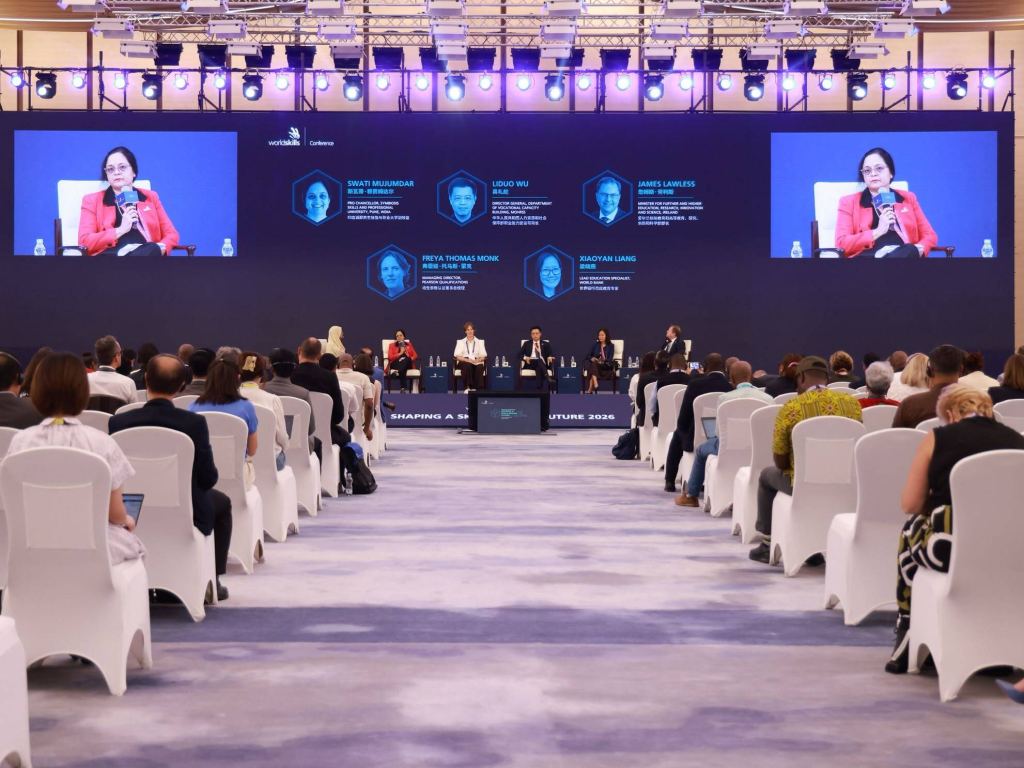
Xiaoyan Liang, Lead Education Specialist, World Bank, described the economic importance of inclusive systems in general. She said, “Regardless of gender, disabilities, or previous education, we need to be sure our vocational training does not leave anyone behind. It is not optional. It is an economic imperative.”
James Lawless, Ireland’s Minister for Further and Higher Education, Research, Innovation and Science, said it is important to view skills as a critical part of a country’s prosperity. He said, “Every nation, and Ireland is no different, must maximize talent. Talent is our greatest national resource. We need to give people the pathways into education in whatever form that takes.”
He explained that where people live can place huge limitations on what skills they can learn. With a third of Ireland’s citizens living in rural areas, this is a challenge that Ireland shares with many other countries. For Mr Lawless, the solution is straightforward. He said, “We bring learning to the learner.”
With Vision 2035 approved and launched this week, the WorldSkills community has asserted that everyone has the right to access skills. Ray English, Board Member of WorldSkills, knows there is still work to be done. He said, “We need to remember that many young people around the world are facing systemic barriers that prevent them from striving for skills excellence.”
He reflects, “We must make it our priority to identify the challenges and learn from the best practice being shared here at WorldSkills Conference 2026. Then, as an organization, we must define what an inclusive skills system looks like and speak in the language of equity, not just equality, so we can truly level the playing field.”
Learn more about WorldSkills commitment to inclusive skills systems in its newly launched Vision 2035 strategic plan.